The 10 Best OTAs for Hotels in 2026: A Complete Guide to More Bookings
By Raymond Girbes -
Jul 5, 2026
- 21 minutes read
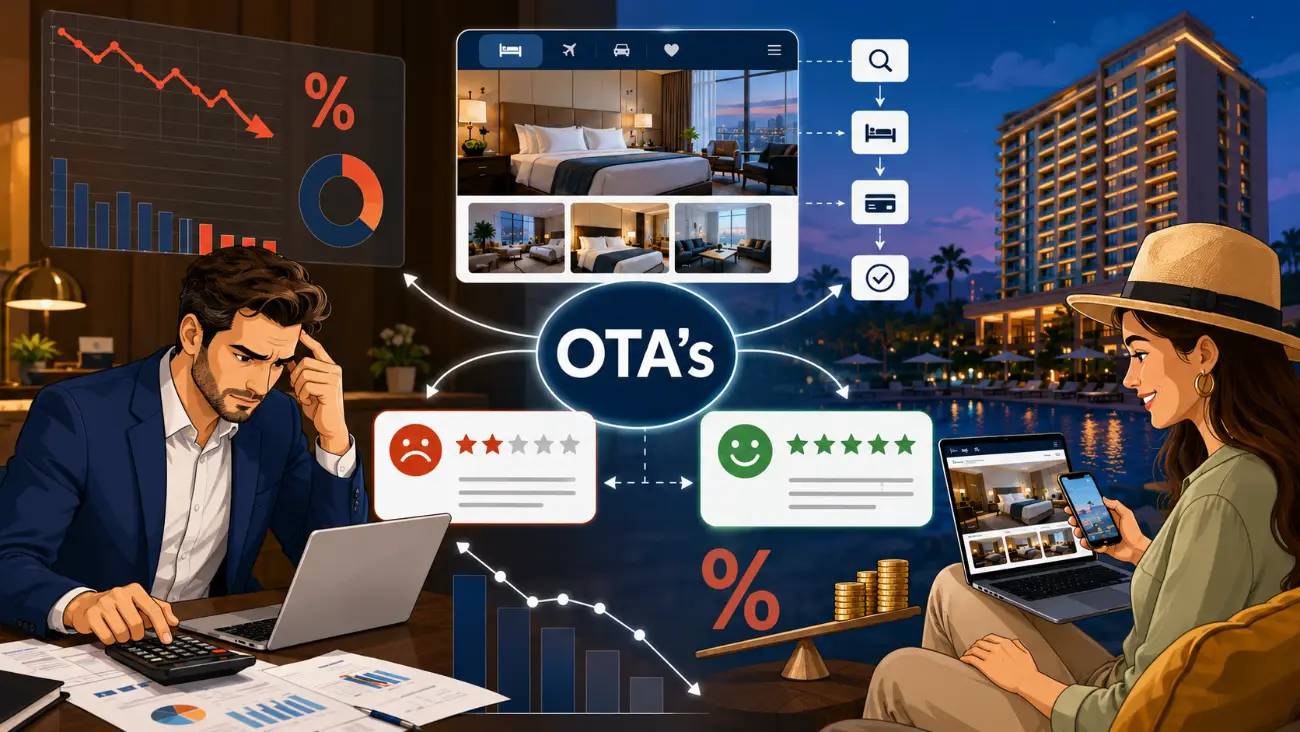
As a hotelier, your two main priorities are full rooms and healthy margins.
Online travel agencies (OTAs) are companies that you can use to support your business operations. But which OTAs actually deliver results, and how can you ensure that your margins aren't squeezed too tightly? This article will teach you what OTAs are, how they work and what they cannot demand from your hotel. Weigh up the pros and cons, and find out which ten platforms will be essential in 2026. I'll also share some personal recommendations, and at the end of the article, I'll answer the most frequently asked questions about OTAs.
What are OTAs for hotels?
An OTA (Online Travel Agency) is a digital platform where travellers can book accommodation, flights, and travel packages. Well-known examples include Booking.com, Expedia and Airbnb. For hotels, OTAs serve as an external distribution channel, similar to a local travel agency, but with a global user base in the hundreds of millions. The main difference from traditional travel agencies is the speed and convenience. Potential guests can compare, book and pay in minutes at any time of day. As a hotelier, you receive the booking within minutes.
Online travel agencies (OTAs) can be valuable for:
Online travel agencies (OTAs) can be valuable for:
How do OTAs work?
They earn money through a commission model: you pay a percentage of the room price for each successful booking made through their platform. This percentage typically ranges from 10% to 30%, depending on the platform, the type of contract you choose, and the level of visibility you invest in. These costs are significant and deserve careful consideration.
There are generally two types of contract:
1. Merchant Model
Under this model, the guest pays the full amount to the online travel agent (OTA). The OTA then deducts its commission and pays the remainder to the hotel. Expedia often works this way.
2. Agency model
Here, the guest pays the hotel directly. The hotel then pays commission to the OTA. Booking.com uses this model as standard.
In addition to commissions, many OTAs offer paid promotions, such as sponsored placements or higher search result rankings. While these costs are optional, they can help to improve visibility in competitive markets.
Personal advice
My personal advice is always to use the agency model. Not only does this provide a service, it also establishes a direct financial relationship with your guests, strengthening your legal position compared to the merchant model.
What are OTAs for hotels?
An OTA (Online Travel Agency) is a digital platform where travellers can book accommodation, flights, and travel packages. Well-known examples include Booking.com, Expedia and Airbnb. For hotels, OTAs serve as an external distribution channel, similar to a local travel agency, but with a global user base in the hundreds of millions. The main difference from traditional travel agencies is the speed and convenience. Potential guests can compare, book and pay in minutes at any time of day. As a hotelier, you receive the booking within minutes.
Online travel agencies (OTAs) can be valuable for:
- Small and medium-sized hotels that lack the budget for nationwide and international marketing.
- Boutique hotels looking to showcase their unique character to a new audience.
- Hotels in popular tourist destinations, where travellers actively compare prices to get the best deal.
- Boosting occupancy during slow periods.
Online travel agencies (OTAs) can be valuable for:
- Small and medium-sized hotels that lack the budget for nationwide and international marketing.
- Boutique hotels looking to showcase their unique character to a new audience.
- Hotels in popular tourist destinations, where travellers actively compare prices to get the best deal.
- Boosting occupancy during slow periods.
How do OTAs work?
They earn money through a commission model: you pay a percentage of the room price for each successful booking made through their platform. This percentage typically ranges from 10% to 30%, depending on the platform, the type of contract you choose, and the level of visibility you invest in. These costs are significant and deserve careful consideration.
There are generally two types of contract:
1. Merchant Model
Under this model, the guest pays the full amount to the online travel agent (OTA). The OTA then deducts its commission and pays the remainder to the hotel. Expedia often works this way.
2. Agency model
Here, the guest pays the hotel directly. The hotel then pays commission to the OTA. Booking.com uses this model as standard.
In addition to commissions, many OTAs offer paid promotions, such as sponsored placements or higher search result rankings. While these costs are optional, they can help to improve visibility in competitive markets.
Personal advice
My personal advice is always to use the agency model. Not only does this provide a service, it also establishes a direct financial relationship with your guests, strengthening your legal position compared to the merchant model.
The Pros and Cons of OTAs for Hotels
It's wise to weigh the pros and cons before deciding which platforms to use.
Advantages
Disadvantages
Personal vision and advice for OTAs
In my opinion, OTAs need to recognise that the product they sell is ultimately provided by hoteliers, not OTAs. This requires teamwork and effort. A hotel must retain sufficient margin. Constantly devising strategies for OTAs to increase their profits at the expense of hotel margins seems to me to be an unethical business practice. My advice to OTAs is to be content with your profits, but do not aim to increase them at the expense of hotels' margins.
Advantages
- Massive reach: OTAs invest hundreds of millions in marketing. You benefit from that visibility.
- Billboard effect: Many guests discover your hotel via an OTA, but then book directly on your website. This generates bookings without the high commissions.
- Market insights: OTAs provide dashboards with data on search behaviour, occupancy rates and competitors. This information is valuable for your pricing strategy.
- No upfront costs: Your listing is free. You only pay for successful bookings.
Disadvantages
- Commission pressure: With a 20% commission on a €300.00 booking, you pay €60.00 per booking, which drastically reduces your margins.
- Price parity: Some OTAs require you to offer the same or lower prices than on your own website, which can undermine direct bookings.
This is often legally prohibited, especially for large OTAs! An OTA's reduced profit is not a valid reason to prevent hotels from offering lower prices on their own website. Booking.com must also comply with the Digital Markets Act (DMA). Read more about the ban on parity. The same applies to other comparable OTAs. In Germany, for example, the Bundeskartellamt ruled in 2013 that HRS's best price clauses were against antitrust law. - Less control over guest relationships: The OTA may not own customer data, but it often manages the booking process, initial contact and some communication. This reduces the hotel's opportunities to build long-term guest relationships.
- Dependency risk: relying too heavily on one or two OTAs makes you vulnerable to algorithm changes or commission increases.
- OTAs appear in search engine results alongside your hotel details, promoting their own website rather than yours.
Personal vision and advice for OTAs
In my opinion, OTAs need to recognise that the product they sell is ultimately provided by hoteliers, not OTAs. This requires teamwork and effort. A hotel must retain sufficient margin. Constantly devising strategies for OTAs to increase their profits at the expense of hotel margins seems to me to be an unethical business practice. My advice to OTAs is to be content with your profits, but do not aim to increase them at the expense of hotels' margins.

Don't get squeezed until your margins are too low. Illustration © Xootle B.V.
How to Maximize Your OTA Presence
The first step is getting listed on an OTA, but the real profit lies in optimising that presence. Keep the following principles in mind:
OTAs are now a necessity for many hotels to generate revenue, not just an option. Although commissions can be high, the visibility, reach and billboard effect they offer are invaluable to most hoteliers. The key is to maintain a smart mix: use various OTAs to avoid dependency, continuously optimise your profiles and focus simultaneously on direct bookings through your website. This way, you can benefit from the reach of large platforms while safeguarding your margin
- Maintain an up-to-date profile. Professional photos, clear descriptions and complete facility information will significantly boost your conversion rate. OTA algorithms also rank complete profiles higher.
- Actively manage your pricing strategy. Use a channel manager to synchronise rates and availability in real time across all platforms. This prevents overbooking and ensures consistent pricing.
- Encourage direct bookings. Offer guests who booked via an OTA an incentive to book directly next time. Consider offering early bird discounts, free breakfast or a loyalty programme. This will gradually reduce your commission costs.
- Actively collect reviews. OTA algorithms favour hotels with lots of positive reviews. Consistently ask satisfied guests to leave feedback.
OTAs are now a necessity for many hotels to generate revenue, not just an option. Although commissions can be high, the visibility, reach and billboard effect they offer are invaluable to most hoteliers. The key is to maintain a smart mix: use various OTAs to avoid dependency, continuously optimise your profiles and focus simultaneously on direct bookings through your website. This way, you can benefit from the reach of large platforms while safeguarding your margin
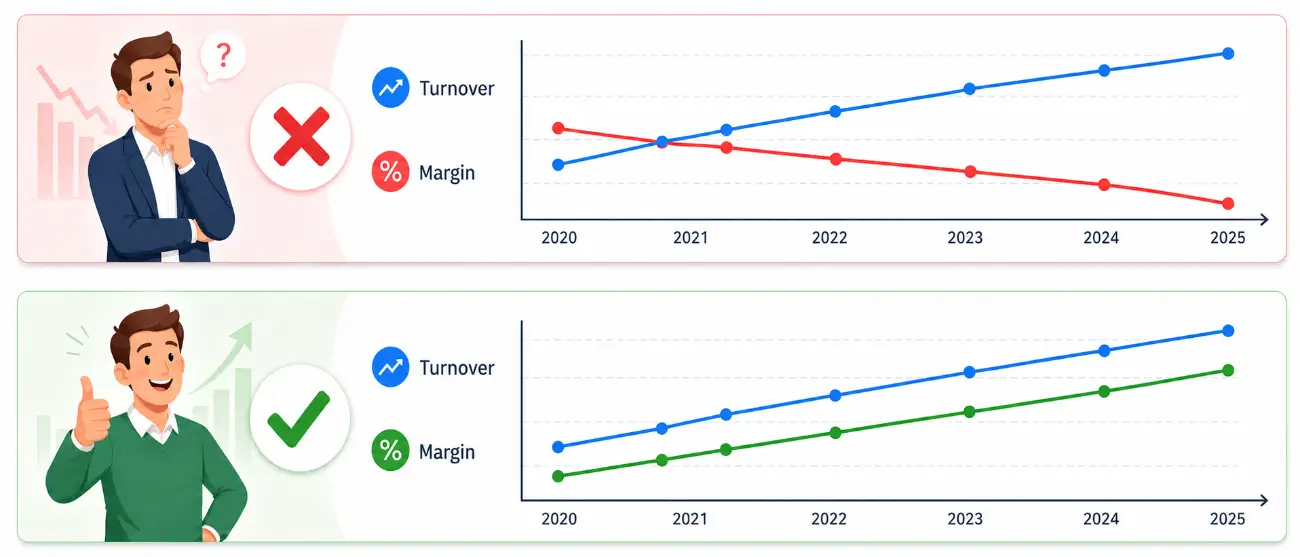
Ensure OTAs positively impact your margins. Illustration © Xootle B.V.
The 10 Best OTAs for Hotels in 2026
1. Booking.com
Booking.com is a key platform for many European hotels within the online travel agency (OTA) mix. It dominates hotel search queries, enjoys high brand recognition among European travellers and offers a wide range of accommodation types, including hotels, apartments and B&Bs. Booking.com is particularly valuable for hotels due to its broad reach, high user booking intent, and strong visibility in search engines and mobile apps. Booking.com markets itself as a platform for hotels, guesthouses, apartments and over two million accommodation options worldwide.
For European hoteliers, Booking.com is often the minimum channel on which they want to be well represented. However, the channel is highly competitive and visibility is strongly correlated with price, availability, profile quality, reviews and partner programmes. While Booking.com remains crucial, it works best when combined with a robust direct booking strategy and active management of margins, rates, and guest relationships.
For European hoteliers, Booking.com is often the minimum channel on which they want to be well represented. However, the channel is highly competitive and visibility is strongly correlated with price, availability, profile quality, reviews and partner programmes. While Booking.com remains crucial, it works best when combined with a robust direct booking strategy and active management of margins, rates, and guest relationships.
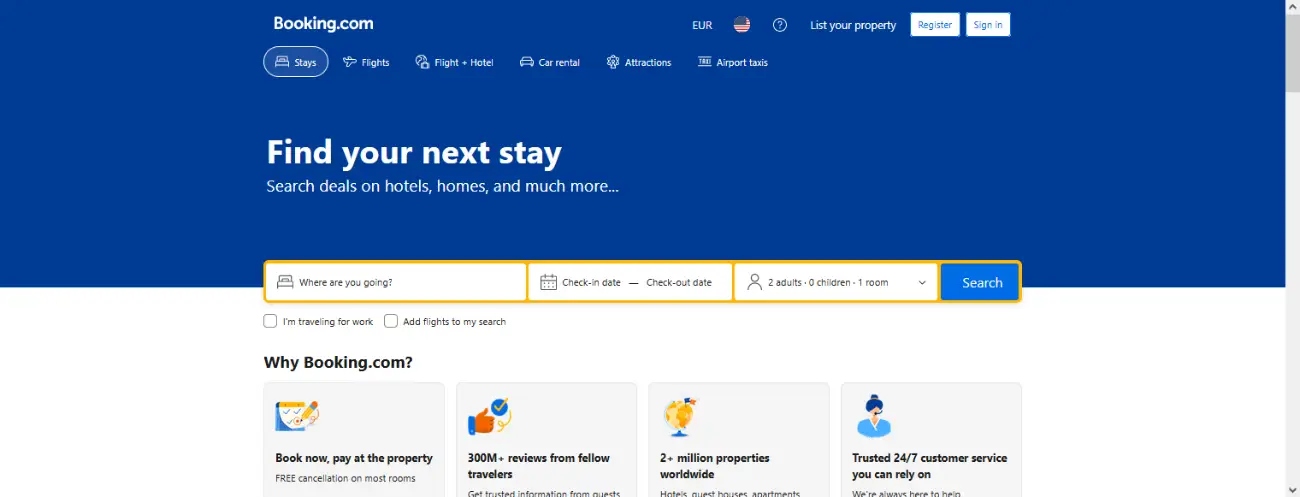
Screenshot www.booking.com on 3 July 2026.
2. Expedia
Expedia is a leading online travel agency (OTA) for hotels looking to attract international demand, particularly from North America, the UK, and other long-haul markets to Europe. It is part of the Expedia Group, whose key consumer brands include Expedia, Hotels.com, and Vrbo. Through Expedia, hotels can increase their visibility within a wider travel ecosystem comprising hotels, flights, car rentals, packages, and other travel services.
Expedia is particularly appealing to European hotels looking to benefit from package bookings, international leisure demand, and travellers combining flights and hotels. While the platform is often less dominant than Booking.com for purely European hotel searches, it can be particularly valuable for hotels in cities, resorts and destinations with significant international visitor numbers. Therefore, if a hotel is seeking to attract demand beyond the local or regional level, Expedia should definitely be included in its OTA mix.
Expedia is particularly appealing to European hotels looking to benefit from package bookings, international leisure demand, and travellers combining flights and hotels. While the platform is often less dominant than Booking.com for purely European hotel searches, it can be particularly valuable for hotels in cities, resorts and destinations with significant international visitor numbers. Therefore, if a hotel is seeking to attract demand beyond the local or regional level, Expedia should definitely be included in its OTA mix.
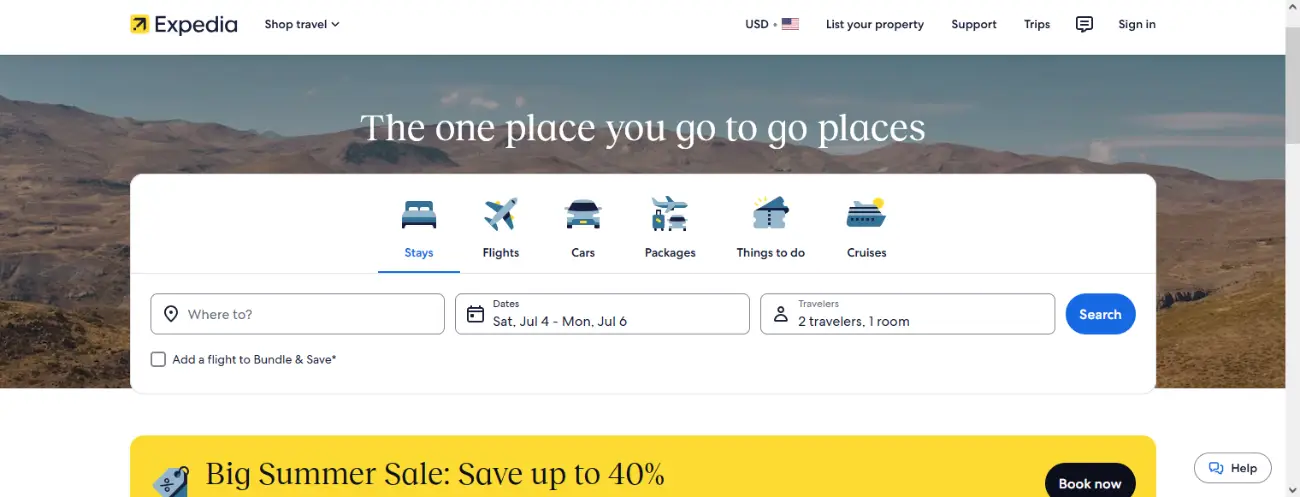
Screenshot www.expedia.com on 3 July 2026.
3. Hotels.com
Hotels.com is a hotel-focused booking platform within the Expedia Group that is particularly relevant for travellers searching for accommodation. The brand is closely associated with hotel deals, search filters, reviews and loyalty benefits within the wider Expedia Group ecosystem, including OneKey. According to Hotels.com, OneKeyCash can be used on Hotels.com, Expedia and Vrbo, thereby integrating the platform into a wider loyalty and travel network.
For hotels in Europe, Hotels.com can be a valuable addition to Expedia, as it may appeal to a slightly different audience of travellers who compare hotels and are sensitive to loyalty incentives and repeat bookings. Hotels.com is particularly useful for city and leisure hotels, as well as other types of accommodation, wishing to benefit from the Expedia Group's strong distribution. While this channel is not typically a replacement for Booking.com or Expedia, it can further strengthen visibility within the same ecosystem.
For hotels in Europe, Hotels.com can be a valuable addition to Expedia, as it may appeal to a slightly different audience of travellers who compare hotels and are sensitive to loyalty incentives and repeat bookings. Hotels.com is particularly useful for city and leisure hotels, as well as other types of accommodation, wishing to benefit from the Expedia Group's strong distribution. While this channel is not typically a replacement for Booking.com or Expedia, it can further strengthen visibility within the same ecosystem.
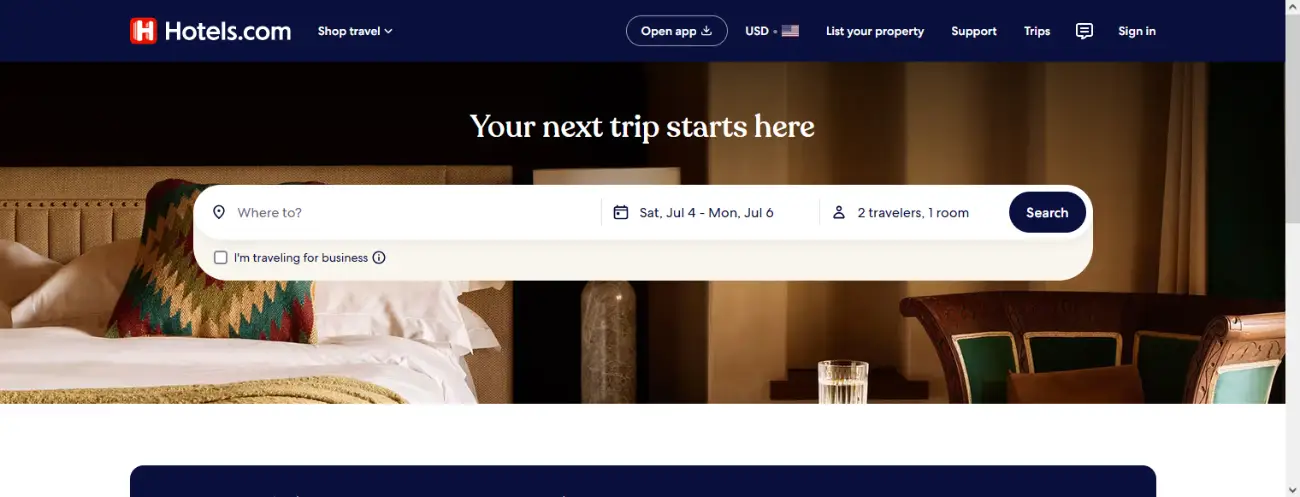
Screenshot www.hotels.com on 3 July 2026.
4. Agoda
Agoda has a strong presence in Asian markets. The platform offers not only hotels and homes, but also flights and activities, as well as combinations such as flights plus hotels. This makes Agoda more than just a hotel booking site. The Agoda partner portal emphasises visibility, campaigns, sponsored placements and travel insights for accommodation providers.
Agoda is particularly appealing to European hotels in destinations that attract many international or Asian travellers, such as major cities, tourist hotspots and locations near airports. Price-conscious leisure travellers often use Agoda to compare deals. While the platform is less obvious for smaller, local hotels, it can add significant value when seeking international reach and aiming to diversify from Booking.com and Expedia.
Agoda is particularly appealing to European hotels in destinations that attract many international or Asian travellers, such as major cities, tourist hotspots and locations near airports. Price-conscious leisure travellers often use Agoda to compare deals. While the platform is less obvious for smaller, local hotels, it can add significant value when seeking international reach and aiming to diversify from Booking.com and Expedia.
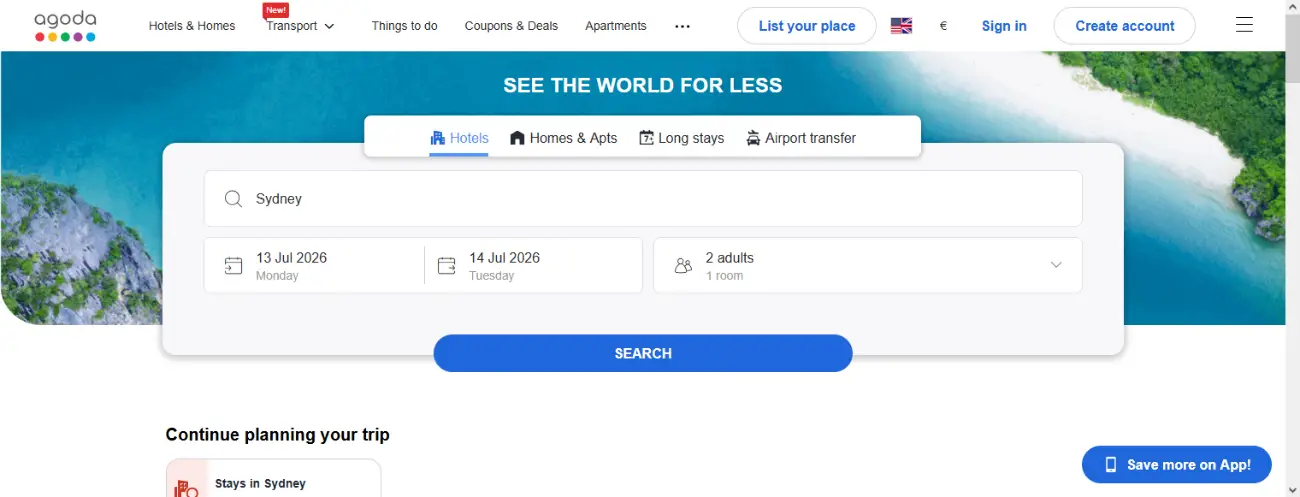
Screenshot www.agoda.com on 3 July 2026.
5. Airbnb
Airbnb has become an increasingly important platform for hotels, especially boutique and independent establishments, in 2026. In its 2026 Summer Release, Airbnb announced that it would be adding thousands of boutique and independent hotels in twenty of the world's top destinations, including European cities such as London, Paris, Madrid and Rome. This marks Airbnb's evolution from a platform for private stays to a broader travel platform where selected hotels can also be listed.
European hotels with a local, small-scale, design-oriented or distinctive character will find Airbnb particularly appealing. Examples include boutique hotels, aparthotels, B&Bs, serviced apartments, and hotels catering to longer stays or experience-driven trips. However, pay close attention to the cost structure: Airbnb mentions that traditional hospitality listings, such as hotels and serviced apartments, may fall under specific fee models that differ from the familiar 3% host fee.
European hotels with a local, small-scale, design-oriented or distinctive character will find Airbnb particularly appealing. Examples include boutique hotels, aparthotels, B&Bs, serviced apartments, and hotels catering to longer stays or experience-driven trips. However, pay close attention to the cost structure: Airbnb mentions that traditional hospitality listings, such as hotels and serviced apartments, may fall under specific fee models that differ from the familiar 3% host fee.
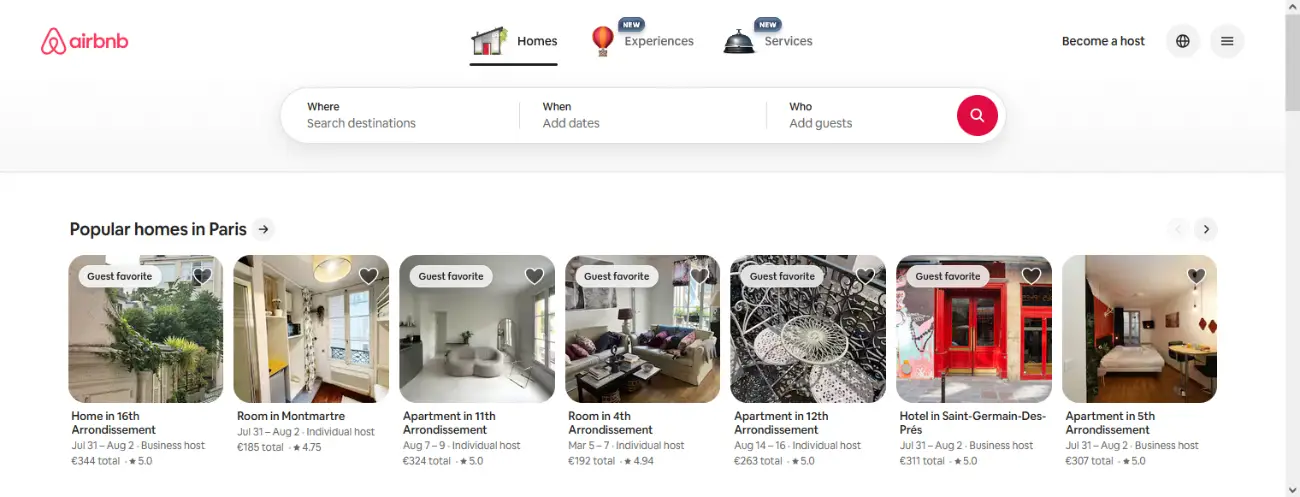
Screenshot www.airbnb.com on 3 July 2026.
6. Trip.com
Trip.com is an essential platform for hotels looking to attract travellers from China and other Asian markets. The Trip.com Group has an extensive international partner network, which it claims includes over 1.7 million hotel accommodation options and 600 airlines. Trip.com itself communicates that it has over 1.5 million hotels in its portfolio, spanning more than 200 countries and regions.
Trip.com is particularly beneficial for European hotels looking to attract inbound demand from Asia, as well as those looking to attract bookings for city breaks, group bookings and long-haul destinations. While the platform is less critical for individual local hotels, it can be strategically essential for accommodation in popular European destinations such as Amsterdam, Paris, London, Rome, Barcelona and Madrid. Hotels looking to reduce their reliance on Western OTAs can use Trip.com to diversify and strengthen their channel mix.
Trip.com is particularly beneficial for European hotels looking to attract inbound demand from Asia, as well as those looking to attract bookings for city breaks, group bookings and long-haul destinations. While the platform is less critical for individual local hotels, it can be strategically essential for accommodation in popular European destinations such as Amsterdam, Paris, London, Rome, Barcelona and Madrid. Hotels looking to reduce their reliance on Western OTAs can use Trip.com to diversify and strengthen their channel mix.
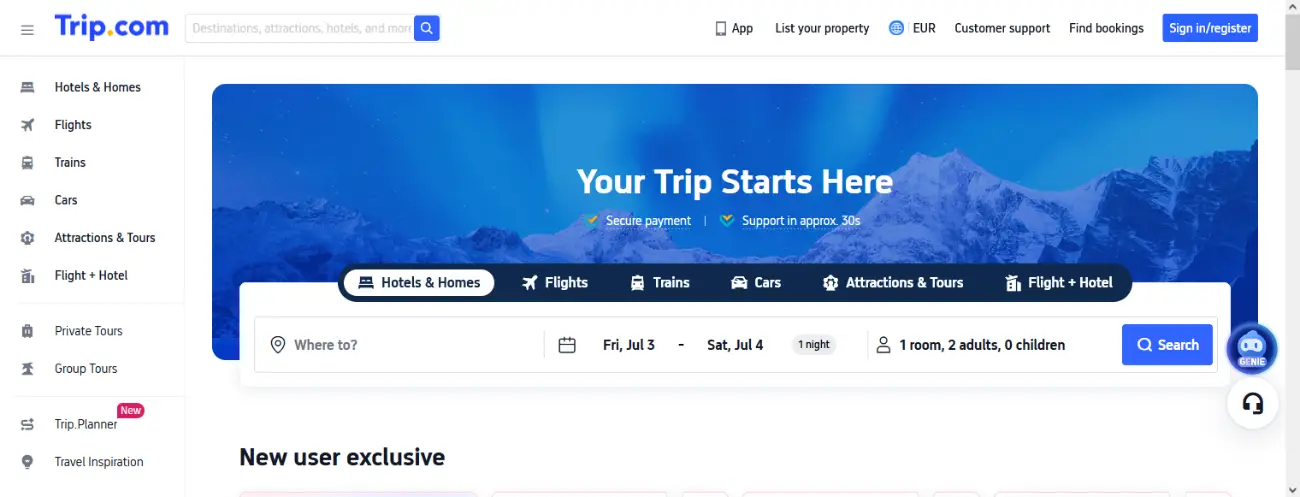
Screenshot www.trip.com on 3 July 2026.
7. lastminute.com
lastminute.com is ideal for hotels targeting spontaneous travellers, city breaks, package holidays and short-term demand. With a strong focus on hotels, flights, city breaks, holidays and dynamic packages, the platform is particularly relevant for European leisure hotels looking to fill rooms outside of peak times or in response to last-minute demand.
For European hotels, lastminute.com can be a valuable secondary channel, complementing major OTAs such as Booking.com and Expedia. While not as indispensable as Booking.com, the platform can be effective for city hotels, resorts, weekend hotels, and other types of accommodation that are popular for short breaks or flight-plus-hotel bookings. Its most significant advantage is the additional visibility it provides among travellers seeking flexibility, quick bookings or package deals.
For European hotels, lastminute.com can be a valuable secondary channel, complementing major OTAs such as Booking.com and Expedia. While not as indispensable as Booking.com, the platform can be effective for city hotels, resorts, weekend hotels, and other types of accommodation that are popular for short breaks or flight-plus-hotel bookings. Its most significant advantage is the additional visibility it provides among travellers seeking flexibility, quick bookings or package deals.
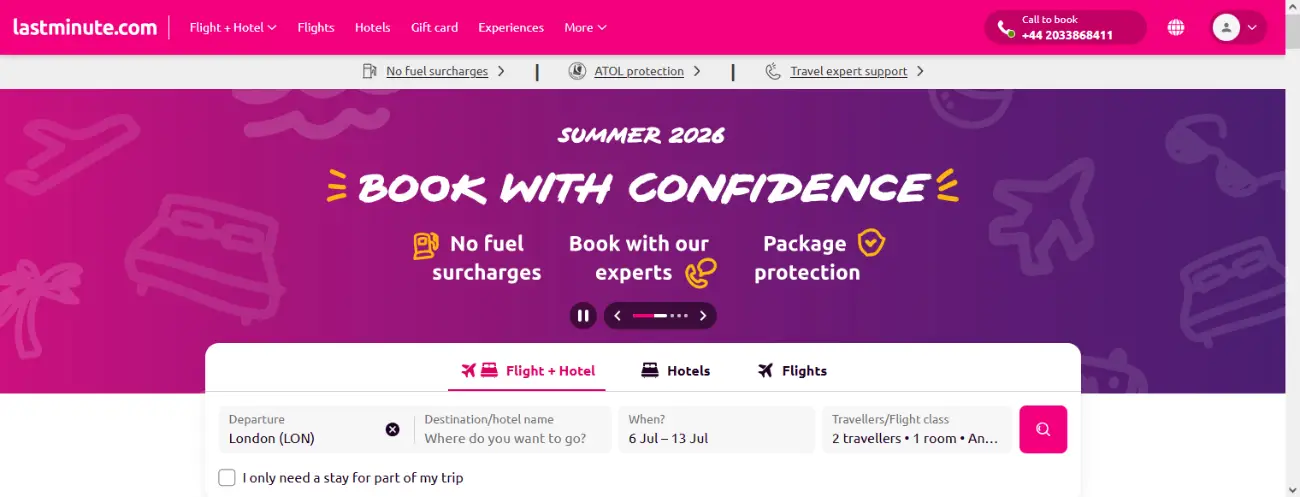
Screenshot www.lastminute.comon 3 July 2026.
8. HRS
HRS is a leading online travel agency (OTA) and hotel booking partner for business travellers. Unlike many OTAs, which mainly target leisure guests, HRS focuses on corporate lodging, business travel, meetings, long stays and hotel programmes for companies. HRS describes itself as a corporate lodging and meetings platform that supports processes related to procurement, booking, payment, compliance and reporting.
HRS is of particular interest to hotels looking to attract business demand, for example during weekdays, outside vacation periods, or in cities with significant corporate travel. Through HRS, hotels can access corporate programmes and companies that centrally purchase hotel accommodation. Therefore, HRS is not a mass channel for every traveller, but rather a strategic channel for hotels aiming to reach corporate accounts, meetings or business travellers.
HRS is of particular interest to hotels looking to attract business demand, for example during weekdays, outside vacation periods, or in cities with significant corporate travel. Through HRS, hotels can access corporate programmes and companies that centrally purchase hotel accommodation. Therefore, HRS is not a mass channel for every traveller, but rather a strategic channel for hotels aiming to reach corporate accounts, meetings or business travellers.
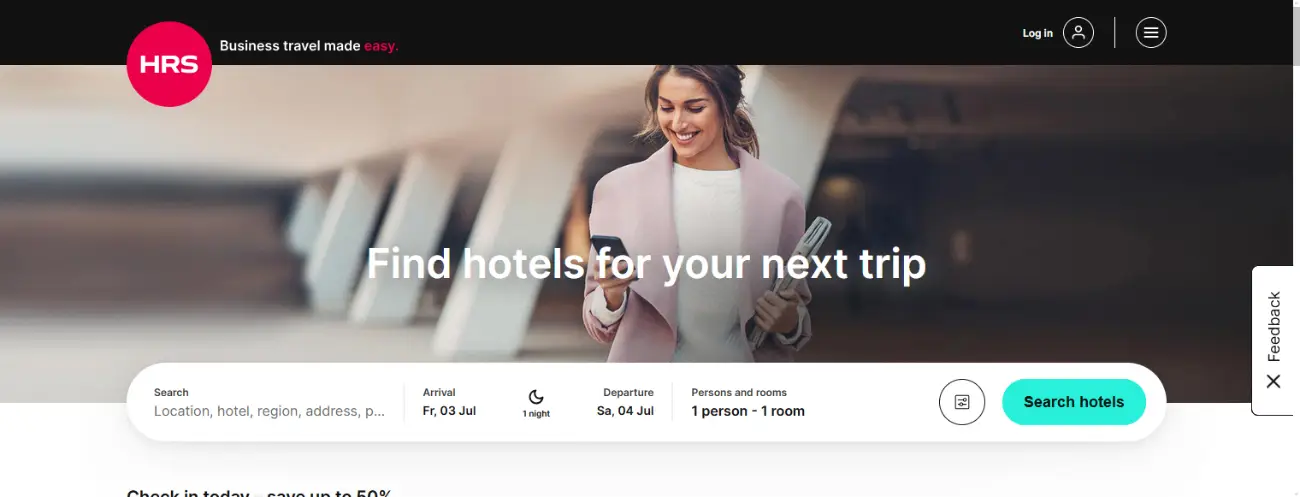
Screenshot www.hrs.com on 3 July 2026.
9. eDreams ODIGEO
eDreams ODIGEO is a leading European online travel company with well-known brands such as eDreams, Opodo, GO Voyages, Travellink and Liligo in its portfolio. The company markets itself as a leading travel subscription platform, operating in 44 markets. Its services include flights, hotels, train travel, car rentals and package holidays.
In terms of hotels, eDreams ODIGEO is primarily relevant as an additional channel for travellers combining accommodation with flights or other travel services. The company's strength lies less in pure hotel searches and more in package-driven demand, international leisure bookings and travellers booking through a subscription or benefits programme. Consequently, eDreams ODIGEO can be an attractive option for European hotels, in addition to classic hotel OTAs, particularly when looking to capitalise on city trips and holiday demand driven by flights.
In terms of hotels, eDreams ODIGEO is primarily relevant as an additional channel for travellers combining accommodation with flights or other travel services. The company's strength lies less in pure hotel searches and more in package-driven demand, international leisure bookings and travellers booking through a subscription or benefits programme. Consequently, eDreams ODIGEO can be an attractive option for European hotels, in addition to classic hotel OTAs, particularly when looking to capitalise on city trips and holiday demand driven by flights.
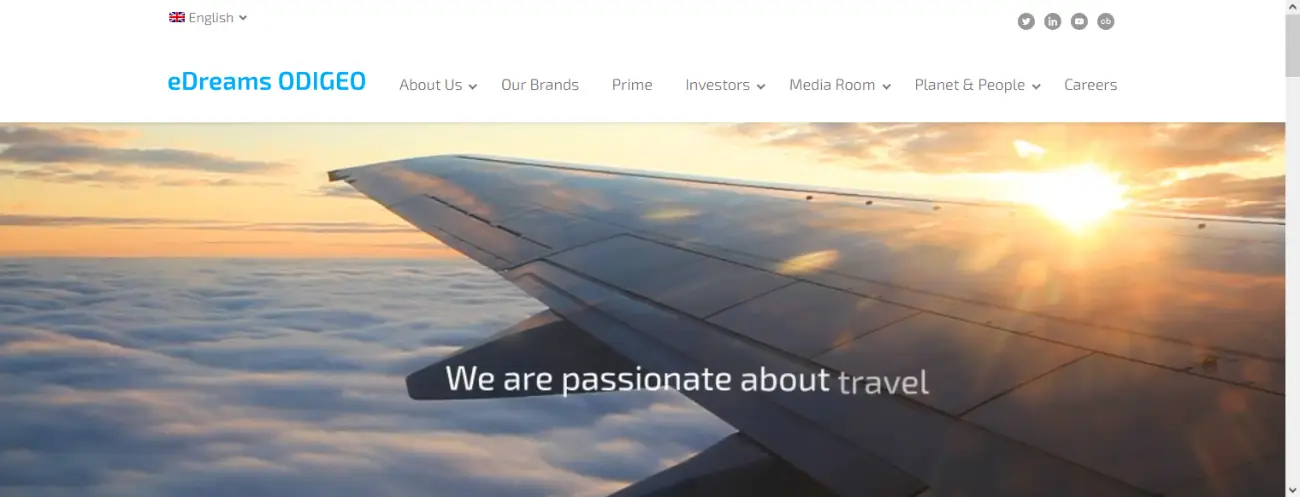
Screenshot www.edreamsodigeo.com on 3 July 2026.
10. Mr & Mrs Smith
Mr & Mrs Smith is not a mainstream channel for all hotels, but a specialised platform for boutique and luxury accommodation. The brand specialises in hand-picked hotels, stylish stays, luxury city breaks, romantic getaways and unique accommodation. For travellers, Mr & Mrs Smith offers a selection of carefully curated hotels, extras upon arrival, and a focus on luxury and boutique accommodation.
Luxury and boutique hotels, as well as lifestyle accommodation providers, can find Mr & Mrs Smith valuable, as their audience often seeks more than just price. The match is particularly strong for hotels that stand out for their design, service, location, gastronomy or pronounced brand experience. The platform is less relevant for standard hotels, but for those with a premium positioning, it can contribute to qualitative visibility, higher guest value, and a better brand fit than broad OTAs.
Luxury and boutique hotels, as well as lifestyle accommodation providers, can find Mr & Mrs Smith valuable, as their audience often seeks more than just price. The match is particularly strong for hotels that stand out for their design, service, location, gastronomy or pronounced brand experience. The platform is less relevant for standard hotels, but for those with a premium positioning, it can contribute to qualitative visibility, higher guest value, and a better brand fit than broad OTAs.
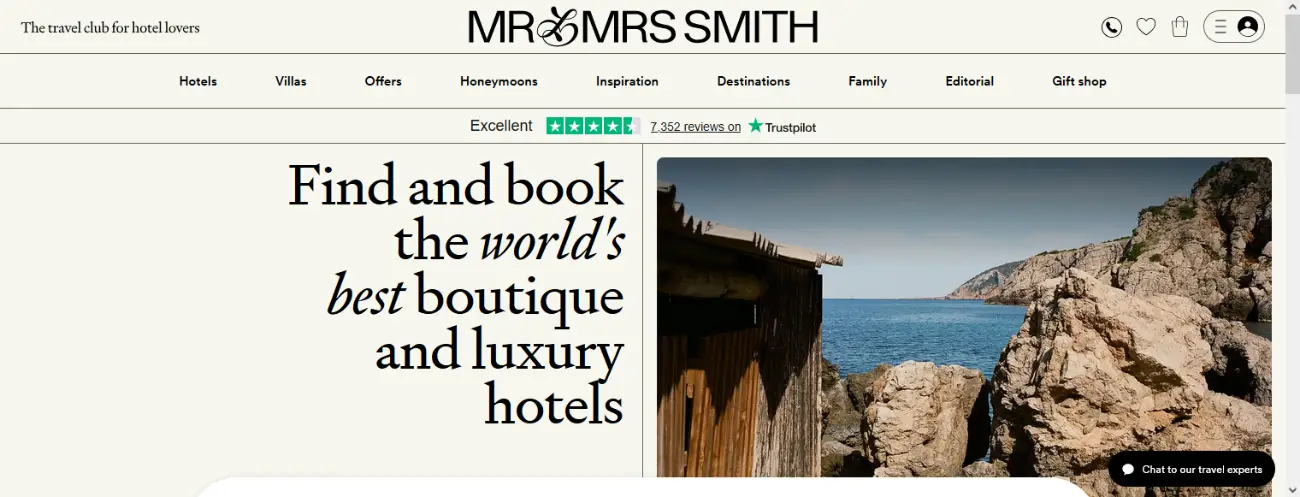
Screenshot www.mrandmrssmith.com on 3 July 2026.
Less popular in Europe but noteworthy elsewhere. That's why I want to mention them.
Travelocity
Travelocity, which is part of the Expedia Group, is one of the oldest and most trusted online travel agencies (OTAs) on the market. The platform specialises in package holidays and is particularly popular in the United States. Hotels offering packages such as rooms with breakfast included, spa access or tickets to city attractions will find a receptive audience here.
It is suitable for hotels looking to sell packages and arrangements.
It is suitable for hotels looking to sell packages and arrangements.
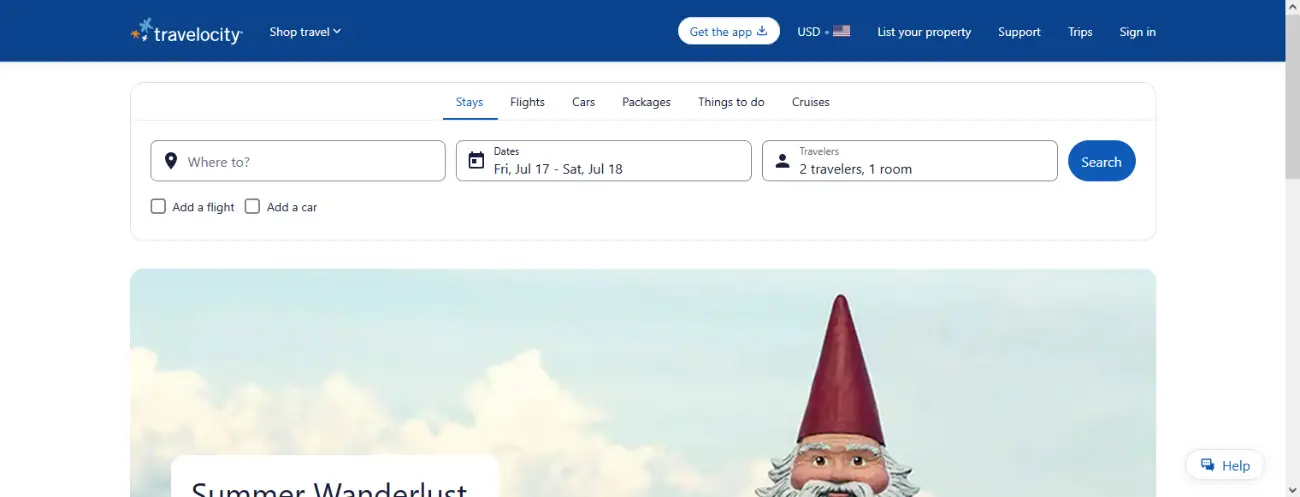
Screenshot www.travelocity.com on 3 July 2026.
Orbitz
Orbitz, which is also part of the Expedia Group, specifically targets American travellers. The platform offers a loyalty programme with instantly redeemable rewards, which makes it easier for people to make their first booking. If you're already on Expedia, listing on Orbitz is free, providing extra reach without additional costs.
It is suitable for hotels targeting the US market.
It is suitable for hotels targeting the US market.
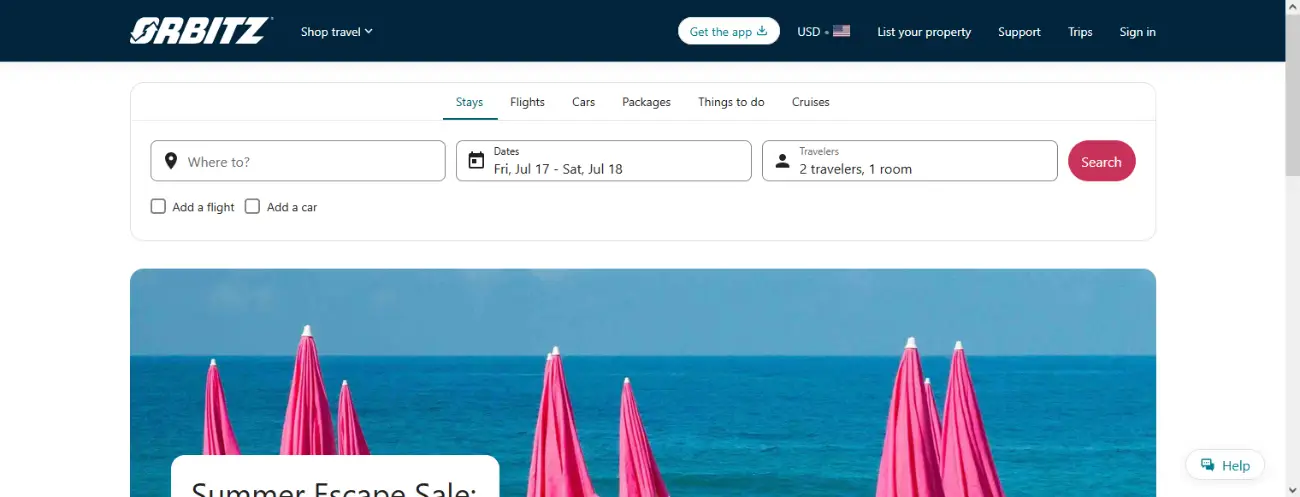
Screenshot www.orbitz.com on 3 July 2026.
Tripadvisor
Tripadvisor combines travel reviews with a booking function, partnering with major OTAs such as Expedia and Priceline. Guests use Tripadvisor extensively to explore. Having a strong reputation on Tripadvisor, based on guest reviews, not only increases your bookings, but also improves your SEO visibility beyond the platform.
This is suitable for hotels with a strong reputation who want to use Tripadvisor as a marketing tool.
This is suitable for hotels with a strong reputation who want to use Tripadvisor as a marketing tool.
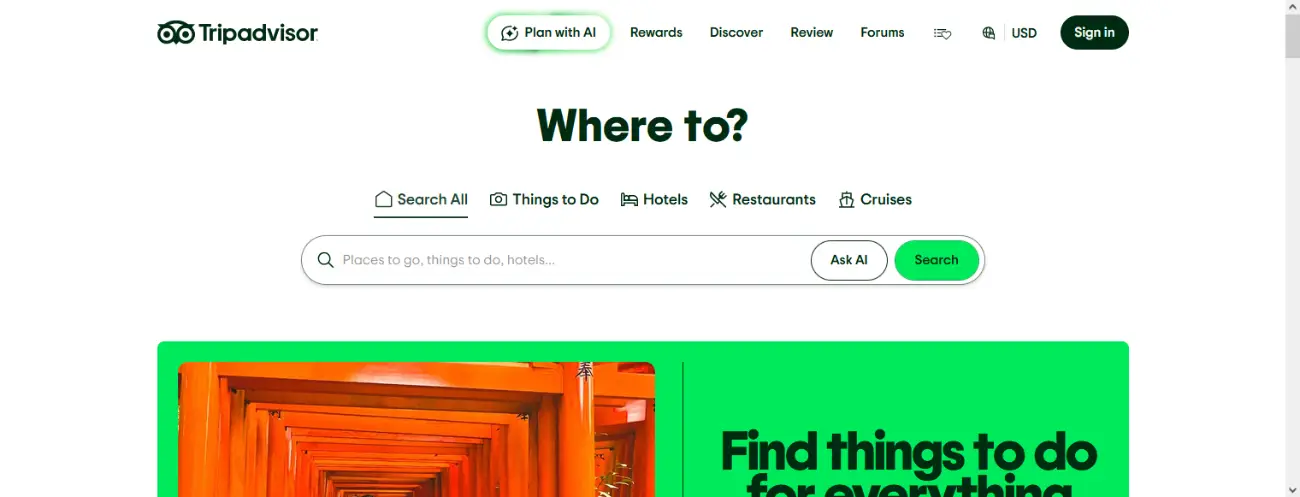
Screenshot from www.tripadvisor.com on 3 July 2026.
Frequently Asked Questions About OTAs for Hotels (FAQ)
What is an OTA in the hotel industry?
What is an OTA in the hotel industry?
An online travel agency (OTA) is a platform where travellers can search for, compare and book hotels. For hotels, OTAs are external distribution channels that provide visibility and bookings in exchange for a commission.
What does OTA stand for?
What does OTA stand for?
OTA stands for Online Travel Agency.
What are examples of OTAs?
What are examples of OTAs?
Well-known online travel agencies (OTAs) include Booking.com, Expedia, Hotels.com, Agoda, Airbnb, Trip.com, Lastminute.com, eDreams, HRS and HotelTonight.
How do OTAs make money?
How do OTAs make money?
Online travel agencies (OTAs) typically generate revenue through commission on bookings. Some platforms also generate revenue through advertising, promotional programmes, packages, insurance and other supplementary services.
What commission do hotels pay to OTAs?
What commission do hotels pay to OTAs?
Commission rates vary by platform and contract, but often range from 10% to 25%. Additional visibility or promotions may increase the final cost.
Is Google Hotel Search an online travel agency (OTA)?
Is Google Hotel Search an online travel agency (OTA)?
No, Google Hotel Search is a metasearch platform that displays rates from OTAs and direct hotel websites side by side. This allows hotels to encourage direct bookings.
What is the difference between an OTA and a metasearch engine?
What is the difference between an OTA and a metasearch engine?
An OTA usually handles the booking directly. A metasearch engine compares prices from various providers and directs travellers to an OTA or the hotel's website. Examples of metasearch platforms include Google Hotel Search, Trivago and Kayak.
What is the difference between an OTA and a GD?
What is the difference between an OTA and a GD?
An Online Travel Agency (OTA) focuses on travellers who search, compare and book online. In contrast, a GDS (Global Distribution System) is a B2B distribution system primarily used by travel agencies, travel management companies, and corporate travel departments. While OTAs are primarily geared towards consumer bookings, GDS channels are more relevant for business travel, corporate accounts, and travel agents.
What does 'rate parity' mean in relation to OTAs?
What does 'rate parity' mean in relation to OTAs?
Rate parity means that a hotel offers the same or similar rates across different channels. The exact rules differ depending on the platform and market. Hotels can often offer direct benefits without changing the room rate itself. The Digital Markets Act largely prohibits the enforcement of parity rates.
How can a hotel achieve a higher ranking on an online travel agency (OTA)?
How can a hotel achieve a higher ranking on an online travel agency (OTA)?
Online travel agencies (OTAs) consider many factors when ranking accommodation, such as profile quality, availability, price competitiveness, conversion rates, reviews, response time, cancellation policy and guest satisfaction. You can improve your position by using professional photos, providing clear descriptions of room types, keeping rates up to date, ensuring you have sufficient availability and actively managing reviews. Paid visibility and partner programmes offer greater exposure, but incur higher costs that impact your margin.
Which OTA is the best one for small hotels?
Which OTA is the best one for small hotels?
Booking.com, Expedia, Airbnb and Agoda are often attractive channels for small hotels, B&Bs and boutique hotels, but the best choice depends on your target audience. Booking.com offers considerable reach; Airbnb is suited to small-scale or unique accommodation; Expedia is strong in terms of international and package-driven demand; and Agoda is popular with travellers from Asian markets. Consider reach, commission, guest type, cancellation behaviour and net profit per channel.
Are OTAs suitable for luxury hotels?
Are OTAs suitable for luxury hotels?
Yes, but luxury hotels tend to use OTAs more selectively than budget hotels. For luxury accommodation, visibility, brand presentation and guest quality are more important than volume. Depending on the market and positioning, platforms like Booking.com, Expedia, Mr & Mrs Smith, and Tablet Hotels, as well as other niche channels, can be interesting. Luxury hotels should use OTAs to acquire business and increase visibility, while also investing in direct bookings, loyalty programmes, and building personal relationships with guests.
What is the 'billboard effect'?
What is the 'billboard effect'?
The 'billboard effect' occurs when travellers discover a hotel on an online travel agency (OTA), but then visit the hotel's official website and possibly book directly. Visibility on OTAs can indirectly lead to direct bookings.
How can hotels reduce their dependency on OTAs?
How can hotels reduce their dependency on OTAs?
A hotel can reduce its dependency on OTAs by strengthening its website, booking module, presence on metasearch platforms, email marketing and loyalty strategy. This ensures that OTAs remain an acquisition channel, but not the only one.
Why is a channel manager important for OTAs?
Why is a channel manager important for OTAs?
A channel manager synchronises rates and availability between the Property Management System (PMS) and Online Travel Agents (OTAs), thereby preventing manual errors, double bookings and outdated prices.
How can overbookings via OTAs be prevented?
How can overbookings via OTAs be prevented?
Use real-time synchronisation via a property management system (PMS) and channel manager. Establish clear inventory rules, reliable restrictions and efficient cancellation processing. Avoid offering your last room on multiple OTAs simultaneously. If multiple bookings occur at the same time on different OTAs, overbooking can result. Therefore, it is best to offer the last room through one OTA or your own booking engine.
How can you identify the most suitable OTAs for your hotel?
How can you identify the most suitable OTAs for your hotel?
Consider the target audience, source markets, type of accommodation, commission rates, cancellation policies, promotional costs and net profit. The best online travel agency (OTA) isn't necessarily the largest platform, but rather the one that attracts profitable guests.
How many online travel agencies (OTAs) should a hotel use?
How many online travel agencies (OTAs) should a hotel use?
This depends on factors such as size, market and strategy. For example, a small hotel might be better off with a few well-managed channels than a long list of poorly maintained profiles. Larger hotels can use more channels if distribution is automated. Being on multiple platforms spreads risk and enables you to reach different market segments. Use a channel manager to automatically synchronise availability and prices and avoid overbooking.
How can you improve your position on OTAs?
How can you improve your position on OTAs?
Improve the quality of your profile, photos, review score, pricing strategy, availability, cancellation policies and conversion rate. Some OTAs also offer paid visibility or promotion programmes.
How important are reviews on OTAs?
How important are reviews on OTAs?
Reviews are crucial. They influence trust, click behaviour and conversion, and can even affect visibility on the platform. Respond professionally and use feedback to improve guest experiences. Remember that behind every review is a person who had an experience. A negative experience results in a negative review, whereas a positive experience leads to a happy or satisfied guest, and thus a positive review. If you have gone above and beyond for a guest and still received a negative review, contact the OTA promptly, explain the situation and express your objection. Alternatively, contact the guest to find out what went wrong. A good conversation can change a review for the better.
What is the difference between OTAs and direct bookings?
What is the difference between OTAs and direct bookings?
With OTA bookings, the guest books through an external platform and the hotel pays a commission. With direct bookings, however, the guest books via the hotel's website or reservations department. This allows the hotel to retain more margin, data and control.
Can OTAs help with direct bookings?
Can OTAs help with direct bookings?
Yes, OTAs can draw attention to your hotel thanks to the billboard effect, after which travellers may book directly via your website. This is effective if the direct booking process is quick, straightforward and appealing.
How can you tell if an OTA is profitable?
How can you tell if an OTA is profitable?
Consider more than just revenue; take into account net income after commission, promotional costs, cancellations, payment terms, average length of stay, guest segment and potential for repeat bookings.
What are the differences between the agency and merchant models?
What are the differences between the agency and merchant models?
In the agency model, the guest usually pays the hotel, which then pays the online travel agent (OTA) a commission afterwards. In the merchant model, the guest pays the OTA upfront and the hotel receives the agreed net amount later.
What role will AI have in the future of OTAs?
What role will AI have in the future of OTAs?
AI has the power to transform every aspect of travel planning, from personalisation to booking advice. Travellers are increasingly searching based on their intentions, preferences, and context. Hotels must ensure that their content, prices, availability and direct channels are well structured and easy to find. However, AI must first become reliable enough to inform significant decisions. Currently, in May 2026, most AI-generated answers and decisions are incorrect. Read all about AI and intelligence in this article.
Is it advisable for a hotel to avoid OTAs?
Is it advisable for a hotel to avoid OTAs?
No, OTAs can be invaluable in terms of visibility and acquiring new guests. However, the real risk arises if a hotel becomes overly dependent on OTAs and lacks a robust direct booking strategy. Caution is advised: if you give an OTA an inch, they'll take the whole cookie jar.