VIPs in Hospitality: From Status Symbol to Guest Experience
By Raymond Girbes -
Jul 4, 2025
- 8 minutes read
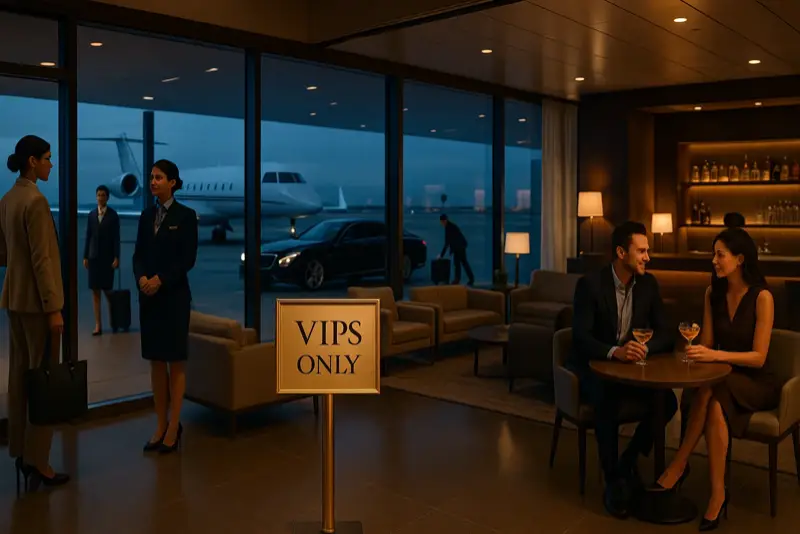
How did the symbol of VIPs exclusivity originate and change over time?
We often hear phrases like "VIPs only" or "access to the VIP lounge" at hotels, clubs, events, and airports. But where did the term originate? How did this abbreviation become synonymous with status and priority in the hospitality sector? This article delves into the history, significance, and usage of the term. I've explored its origins and its meaning across different cultures.
What Does "VIP" Mean?
The term "VIP" stands for "very important person," and "VIPs" is the plural form. When referring to VIPs, it usually denotes a group of individuals who are considered very important, influential, or valuable in a particular context, typically within a private or secure environment.
The Origin of VIP and VIPs
The term "VIP" (Very Important Person) first emerged around 1933 in British circles. The earliest known mention of the term appears in the 1933 novel Water on the Brain by Compton Mackenzie, where it was used as an abbreviation. The term gained prominence during World War II in the 1940s. Military leaders in the United Kingdom and the United States used the abbreviation to distinguish senior generals, politicians, and diplomats from ordinary passengers. These individuals were granted access to secure areas, different modes of transportation, and priority services, especially at military airports.
What Does "VIP" Mean?
The term "VIP" stands for "very important person," and "VIPs" is the plural form. When referring to VIPs, it usually denotes a group of individuals who are considered very important, influential, or valuable in a particular context, typically within a private or secure environment.
The Origin of VIP and VIPs
The term "VIP" (Very Important Person) first emerged around 1933 in British circles. The earliest known mention of the term appears in the 1933 novel Water on the Brain by Compton Mackenzie, where it was used as an abbreviation. The term gained prominence during World War II in the 1940s. Military leaders in the United Kingdom and the United States used the abbreviation to distinguish senior generals, politicians, and diplomats from ordinary passengers. These individuals were granted access to secure areas, different modes of transportation, and priority services, especially at military airports.

Military VIPs arrive for an inspection. Photo illustration: © Xootle B.V.
Military logs are the earliest known sources to use the term "VIPs on board" to refer to specific individuals. This term proved useful because it clearly conveyed that these passengers required priority and protection.
The concept of VIPs in civilian aviation emerged after the war. Initially, airlines offered various lounges and services to distinguished guests based on their status. Eventually, they began charging fees for these services. This marked the first time that VIPs were recognized as a specific group entitled to special treatment and benefits.
The concept of VIPs in civilian aviation emerged after the war. Initially, airlines offered various lounges and services to distinguished guests based on their status. Eventually, they began charging fees for these services. This marked the first time that VIPs were recognized as a specific group entitled to special treatment and benefits.
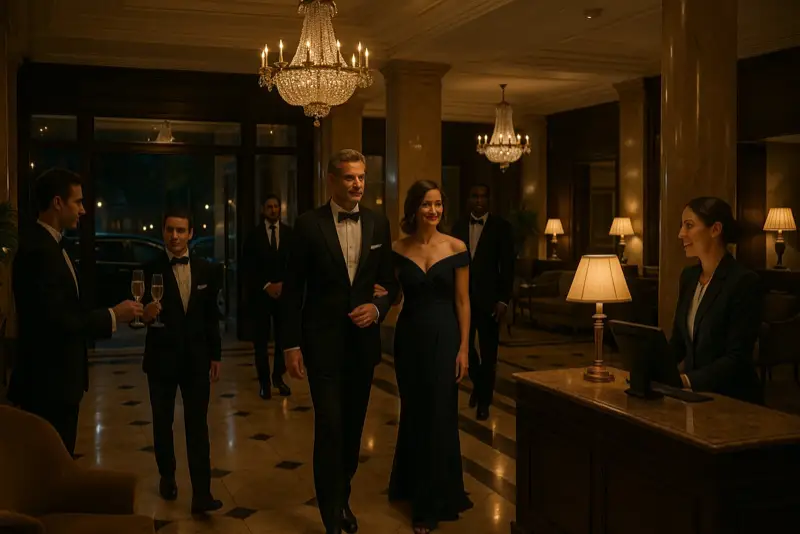
VIP Check-in Experience in Luxury Hotels. Photo illustration: © Xootle B.V.
What makes the VIP experience in hospitality, clubs, and events unique?
The word "VIP" became popular in the realm of luxury hotels, private clubs, and large events in the 1970s and 1980s. The hospitality industry saw this as a marketing opportunity. It offered anyone who could identify as a VIP (or afford to be treated like one) a unique experience.
Selling to VIPs
In the hotel industry, being a VIP depends not only on who you are, but also on how much you spend and how loyal you are to a brand. It's also about how much you spend and how loyal you are to a brand. VIP status is accessible to anyone who purchases a certain package or becomes a loyal customer, not just celebrities or politicians.
Here are some examples: Some hotels offer special packages to their most important guests. These packages include perks like late checkouts, room upgrades, and access to private lounges.
Other hotels offer VIP tickets to concerts or festivals, which provide access to separate entrances, better seats, and complimentary drinks.
In retail, VIP customers get early access to new products based on how frequently they shop.
This form of "paid status" has changed how people think about VIPs. It has made the VIP experience more accessible and flexible.
The culture around very important persons (VIPs)
Despite being designed to make people feel important, some individuals aren't happy with the term "VIP." Separating important people from others can lead to feelings of exclusion or inequality. It's a clever marketing strategy. People love to feel special, and companies cleverly tap into this.
Today, the VIP experience isn't just about physical luxury. It's also about speed, convenience, and personalization.
Fast check-ins, personalized offers, 24/7 concierge services, and AI-driven assistance are a few of the services offered.
Some brands even have digital VIP programs that categorize customers based on their behavior or preferences.
Selling to VIPs
In the hotel industry, being a VIP depends not only on who you are, but also on how much you spend and how loyal you are to a brand. It's also about how much you spend and how loyal you are to a brand. VIP status is accessible to anyone who purchases a certain package or becomes a loyal customer, not just celebrities or politicians.
Here are some examples: Some hotels offer special packages to their most important guests. These packages include perks like late checkouts, room upgrades, and access to private lounges.
Other hotels offer VIP tickets to concerts or festivals, which provide access to separate entrances, better seats, and complimentary drinks.
In retail, VIP customers get early access to new products based on how frequently they shop.
This form of "paid status" has changed how people think about VIPs. It has made the VIP experience more accessible and flexible.
The culture around very important persons (VIPs)
Despite being designed to make people feel important, some individuals aren't happy with the term "VIP." Separating important people from others can lead to feelings of exclusion or inequality. It's a clever marketing strategy. People love to feel special, and companies cleverly tap into this.
Today, the VIP experience isn't just about physical luxury. It's also about speed, convenience, and personalization.
Fast check-ins, personalized offers, 24/7 concierge services, and AI-driven assistance are a few of the services offered.
Some brands even have digital VIP programs that categorize customers based on their behavior or preferences.

VIP is what you make of it! Photo illustration & Slogan: © Xootle B.V.
What is my personal view on the VIP experience?
VIP is what you make of it!
As a hospitality professional, I ask myself, "How do I deliver that VIP feeling?"
But you should also give yourself that VIP experience!
For example, I feel like a VIP when I enjoy a delicious meal or a delightful cup of coffee.
As you can see, being a VIP isn't just about fame, power, and money; it's about the little things, too.
As a hospitality professional, I ask myself, "How do I deliver that VIP feeling?"
But you should also give yourself that VIP experience!
For example, I feel like a VIP when I enjoy a delicious meal or a delightful cup of coffee.
As you can see, being a VIP isn't just about fame, power, and money; it's about the little things, too.
VIPs for Cabin Crew, a true story?
My wife was a flight attendant for many years and traveled the world, from Dubai to London, Amsterdam to Singapore, and Perth to Hong Kong. Simply put, she has literally seen the world.
On an airplane, there's a clear distinction between travel classes, such as economy, business, and first class, where you'll usually find VIPs. During flights, the crew sells products at specific times. My wife always enjoyed this aspect and treated it like a sport, trying to sell as much as possible.
On a flight to Dubai, she was serving business class rather than first class. That day, watches were particularly popular among passengers. After making several sales, she approached a passenger whom she later called "the hidden VIP." Apparently, this man hadn't managed to secure a first-class ticket because space there is also limited.
She showed him some watches, and he calmly picked one. He paid for it neatly. But then something unexpected happened. The man took his "old watch" off his wrist, handed it to her, and said, "I don't need this anymore. Here, it's for you."
My wife was flabbergasted. This wasn't just any watch, it was a beautiful gold watch with a diamond setting!
A fascinating story, right? It’s also heartwarming to see that VIPs not only exude status, but also share it with others.
To make the story more personal, I'd like to add the following: After I met my wife, she gave me a special gift. You guessed it: I received that watch. To this day, I wear it on special occasions and invariably reminisce about its remarkable history.
In Conclusion
In the past, VIP stood for "very important person" and referred to a select group in military or diplomatic circles. Now, in the hospitality industry, the term has expanded to encompass a product type and customer experience. When you hear "VIP," you might think of red carpets, private entrances, champagne, and privacy. However, the concept has evolved to include anything that makes customers feel special.
The term "VIP" has undergone an intriguing transformation. It has evolved from military jargon to commercial success and from status to standard. In the hospitality sector, "VIP" is no longer an objective term. It is now a perceived identity. You can become a VIP by paying for it, being loyal, or being valued for your worth.
In a world where the guest experience is paramount, the term "VIP" may hold more power than ever before. It doesn't define who you are, but rather, how others treat you.
On an airplane, there's a clear distinction between travel classes, such as economy, business, and first class, where you'll usually find VIPs. During flights, the crew sells products at specific times. My wife always enjoyed this aspect and treated it like a sport, trying to sell as much as possible.
On a flight to Dubai, she was serving business class rather than first class. That day, watches were particularly popular among passengers. After making several sales, she approached a passenger whom she later called "the hidden VIP." Apparently, this man hadn't managed to secure a first-class ticket because space there is also limited.
She showed him some watches, and he calmly picked one. He paid for it neatly. But then something unexpected happened. The man took his "old watch" off his wrist, handed it to her, and said, "I don't need this anymore. Here, it's for you."
My wife was flabbergasted. This wasn't just any watch, it was a beautiful gold watch with a diamond setting!
A fascinating story, right? It’s also heartwarming to see that VIPs not only exude status, but also share it with others.
To make the story more personal, I'd like to add the following: After I met my wife, she gave me a special gift. You guessed it: I received that watch. To this day, I wear it on special occasions and invariably reminisce about its remarkable history.
In Conclusion
In the past, VIP stood for "very important person" and referred to a select group in military or diplomatic circles. Now, in the hospitality industry, the term has expanded to encompass a product type and customer experience. When you hear "VIP," you might think of red carpets, private entrances, champagne, and privacy. However, the concept has evolved to include anything that makes customers feel special.
The term "VIP" has undergone an intriguing transformation. It has evolved from military jargon to commercial success and from status to standard. In the hospitality sector, "VIP" is no longer an objective term. It is now a perceived identity. You can become a VIP by paying for it, being loyal, or being valued for your worth.
In a world where the guest experience is paramount, the term "VIP" may hold more power than ever before. It doesn't define who you are, but rather, how others treat you.
Top 25 Most Famous VIPs in the World
Ranked by global recognizability and popularity. 27 May 2026
1
Michael Jackson (1958–2009)
Michael Jackson (1958–2009)
The "King of Pop". The best-selling solo artist of all time, globally iconic.
2
Elvis Presley (1935–1977)
Elvis Presley (1935–1977)
The "King of Rock 'n' Roll". Pioneer of pop culture, world-famous to this day
3
Marilyn Monroe (1926–1962)
Marilyn Monroe (1926–1962)
Timeless Hollywood icon, the face of glamour and pop culture
4
Muhammad Ali (1942–2016)
Muhammad Ali (1942–2016)
"The Greatest". Boxing legend and global symbol of courage and equality.
5
Nelson Mandela (1918–2013)
Nelson Mandela (1918–2013)
Anti-apartheid leader, Nobel Prize winner, first Black president of South Africa.
6
Queen Elizabeth II (1926–2022)
Queen Elizabeth II (1926–2022)
Longest-reigning British monarch, universal face of the British Royal Family.
7
Cristiano Ronaldo
Cristiano Ronaldo
Most followed person on social media worldwide, football legend.
8
Lionel Messi
Lionel Messi
Multiple Ballon d'Or winner, most successful footballer of his generation.
9
Princess Diana (1961–1997)
Princess Diana (1961–1997)
"People's Princess". Beloved humanitarian and iconic member of the British Royal Family.
10
Beyoncé
Beyoncé
Iconic singer, businesswoman and feminist "Queen Bey" with worldwide cult status.
11
Taylor Swift
Taylor Swift
Record-breaking pop star, cultural phenomenon and one of the most powerful artists in the world.
12
Bob Marley (1945–1981)
Bob Marley (1945–1981)
Reggae legend, global symbol of peace and freedom, still enormously popular.
13
Bruce Lee (1940–1973)
Bruce Lee (1940–1973)
Martial arts hero and film icon. Pioneer who permanently influenced Western culture
14
Barack Obama
Barack Obama
44th president of the US. International symbol of hope and political renewal.
15
Madonna
Madonna
"Queen of Pop". Decades-long trendsetter in music, fashion and pop culture.
16
Oprah Winfrey
Oprah Winfrey
Media mogul, billionaire and most influential woman in the entertainment world.
17
LeBron James
LeBron James
Considered the greatest basketball player of all time, global brand icon.
18
Rihanna
Rihanna
World-famous singer and fashion business magnate (Fenty Beauty/Savage X).
19
Elon Musk
Elon Musk
Founder of Tesla and SpaceX, world's richest person and tech visionary.
20
Tiger Woods
Tiger Woods
Golf legend with 15 major titles. The most recognizable golfer in history.
21
Lady Gaga
Lady Gaga
Versatile pop icon, actress (A Star Is Born) and advocate for LGBTQ+ rights.
22
Arnold Schwarzenegger
Arnold Schwarzenegger
World bodybuilding champion, Hollywood action hero (Terminator), Governor of California.
23
Bill Gates
Bill Gates
Co-founder of Microsoft, philanthropist and one of the most influential figures in tech.
24
Pope Francis
Pope Francis
Head of the Roman Catholic Church. Spiritual leader of 1.3 billion believers
25
Donald Trump
Donald Trump
45th and 47th president of the US. One of the most talked-about politicians in the world.