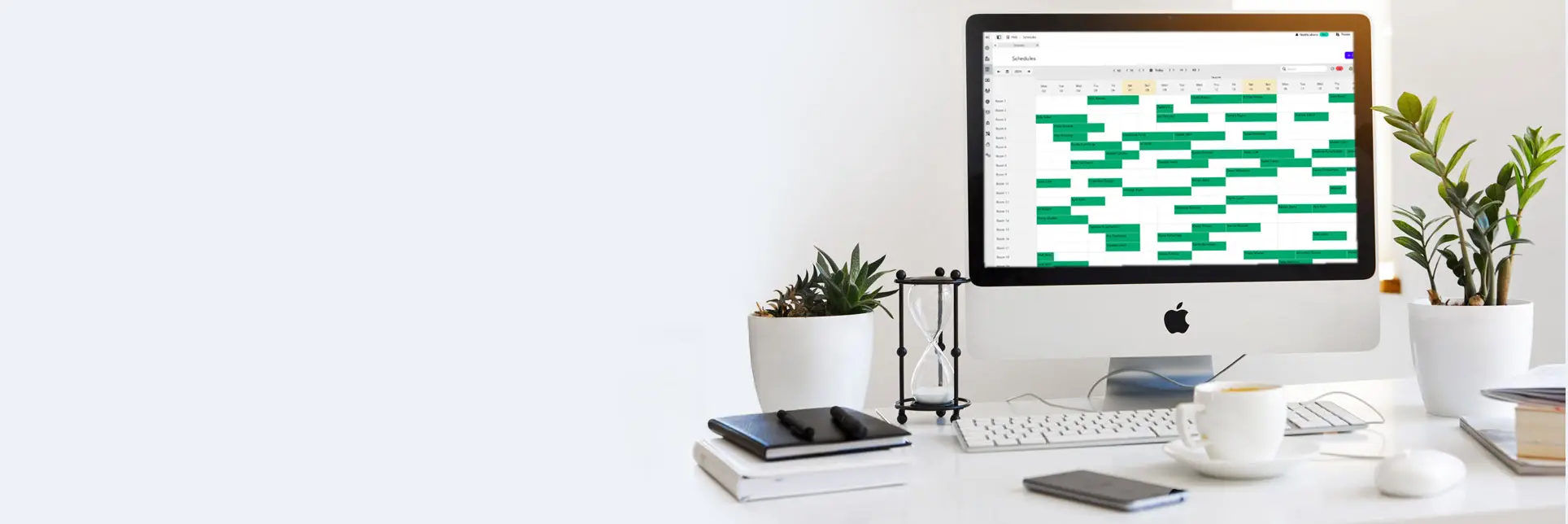
Hotelier PMS
It is crucial for hoteliers to use a Property Management System (PMS). The software streamlines many hotel operations, enhances the guest experience, and boosts efficiency. Whether you manage a small guesthouse or a large resort, a PMS acts as the digital heart of your property management.

What is a Hotelier Property Management System (PMS)?
A Hotelier PMS is a software system that centralizes all functionalities into one unified system for daily management tasks. It integrates key processes into one user-friendly platform. This includes reservation management, guest check-in and check-out, housekeeping coordination, payment processing, and report generation.
A PMS for hoteliers replaces error-prone manual processes and provides real-time insights into rooms, guests, and earnings. Modern PMS solutions are often cloud-based, allowing access from any device with internet connectivity. These systems are maintenance-free, ensuring you always operate with the latest version.
Key Features of a PMS
An effective PMS comprises various modules that seamlessly work together for efficient and smooth operations, such as:
A PMS for hoteliers replaces error-prone manual processes and provides real-time insights into rooms, guests, and earnings. Modern PMS solutions are often cloud-based, allowing access from any device with internet connectivity. These systems are maintenance-free, ensuring you always operate with the latest version.
Key Features of a PMS
An effective PMS comprises various modules that seamlessly work together for efficient and smooth operations, such as:
- Efficiency: Automate repetitive tasks and reduce administrative workload.
- Guest Satisfaction: Offer faster service and more personalized experiences.
- Revenue Management: Optimize pricing strategies and increase turnover.
- Data-Driven Decisions: Utilize real-time data for better business management.
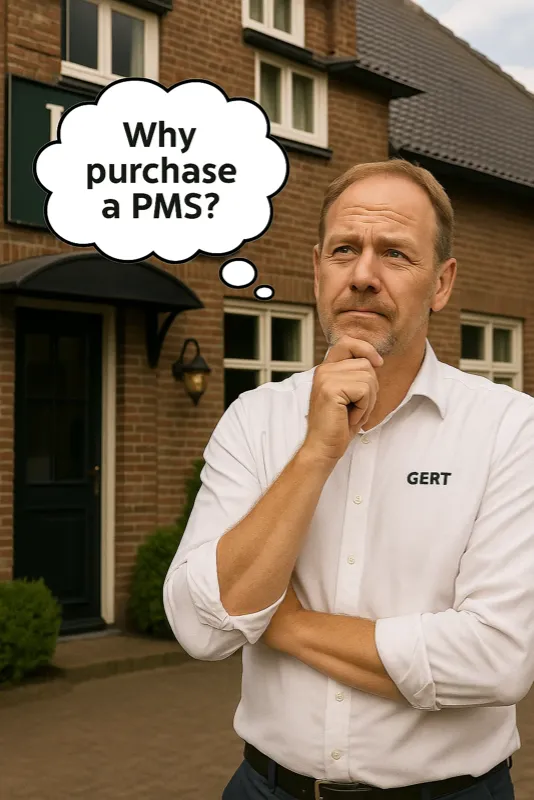
Why Invest in a PMS?
Simple Answer
By centralizing and automating critical and often essential processes, efficiency is increased, significantly enhancing the guest experience. Additionally, it offers valuable insights to help make data-driven decisions, like generating reports and summaries. Whether you manage a small guesthouse or a large hotel, investing in a suitable PMS is a strategic step toward greater success.
Why Every Hotelier Should Consider a PMS Today
Many small-scale hoteliers think a PMS is only for large hotel chains. That's no longer the case. Thanks to scalable and affordable cloud solutions, a PMS is the ideal way for independent hotels to compete with larger players in the hospitality industry.
It Provides:
Tips for Hoteliers Looking to Acquire a PMS
By centralizing and automating critical and often essential processes, efficiency is increased, significantly enhancing the guest experience. Additionally, it offers valuable insights to help make data-driven decisions, like generating reports and summaries. Whether you manage a small guesthouse or a large hotel, investing in a suitable PMS is a strategic step toward greater success.
Why Every Hotelier Should Consider a PMS Today
Many small-scale hoteliers think a PMS is only for large hotel chains. That's no longer the case. Thanks to scalable and affordable cloud solutions, a PMS is the ideal way for independent hotels to compete with larger players in the hospitality industry.
It Provides:
- Time Savings: Less administration, more time for guests.
- Professionalism: A modern system projects trust, including to your guests.
- Data-Driven Management: Understand where your revenue comes from and where opportunities lie.
Tips for Hoteliers Looking to Acquire a PMS
- Choose a system that matches your size: Consider not only features but also ease of use.
- Pay attention to integrations: A PMS that collaborates well with your booking module and POS system prevents frustration.
- Request a demo or trial period: Testing with your team gives the best impression.
- Think about the future: Choose a solution that grows with your hotel.
A PMS is the Digital Heart of Your Hotel Management
Reservation Management
Manage online and offline bookings, group reservations, and direct connections with OTAs (like Booking.com and Expedia). Automatic confirmations via email or SMS improve guest communication.
Front Office & Check-In/Out
Speed up the check-in and check-out process, manage room assignments, and offer mobile or self-service check-in for a modern guest experience.
Housekeeping & Maintenance
Automate cleaning schedules, assign rooms to cleaning staff, and track room status in real-time. This leads to quicker room turnovers and better departmental cooperation.
Channel Manager
Automatically synchronize availability and pricing across all booking channels to avoid overbookings and maximize visibility.
Revenue Management
Dynamically adjust room rates based on demand, seasonality, and competition. Use data analytics to optimize revenue per available room (RevPAR).
CRM & Guest Profiles
Build detailed guest profiles, manage loyalty programs, and personalize communication for an improved guest relationship.
Reporting & Analysis
Generate reports on occupancy rates, revenue, average daily rates (ADR), and more. These insights support strategic decision-making and operational improvements.
Own Booking Engine
Allow your guests to make reservations via your own website. Through the booking engine, offer personalized service and save on commissions for Online Travel Agents (OTAs).

Case Study
How Hotel De Linde Improved Efficiency and Guest Experience with a PMS
Gert is the owner of Hotel De Linde, a charming hotel with 26 rooms located on the edge of a national park. For years, Hotel De Linde struggled with Excel spreadsheets, phone bookings, and handwritten housekeeping schedules. On busy days, the reception was overloaded, and guests often arrived before their rooms were ready. Overbookings and duplicate reservations were more common than Gert would have liked.
The Transition
After speaking with a fellow hotelier, Gert decided to switch to Xootle 's cloud-based reservation system. The transition was completed within two weeks. Xootle assisted with importing existing reservations and contacts, and the team received a brief but effective training session.
What Changed?
Real-time reservation management was immediately operational. Bookings from the website, phone, and platforms like Booking.com and Expedia were now centralized in a single overview, eliminating double work and overbookings.
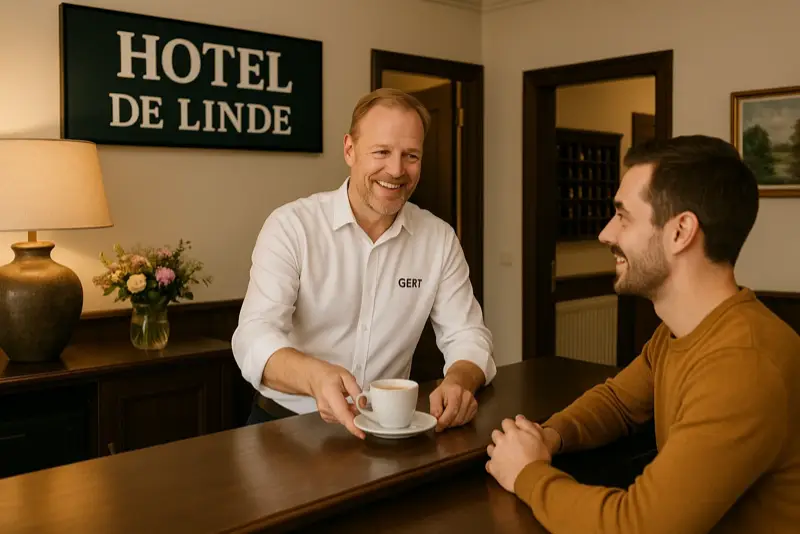
More Enjoyment
In Conclusion
Whether you're just starting with a hotel or have been in the business for years, the hospitality industry is constantly evolving. A PMS not only helps you adapt to these changes but also provides the tools to focus on what truly matters: hospitality.
Like Gert, who, after 20 years, says for the first time: "I enjoy my work more and have time to talk to my guests."
Frequently asked questions
FAQ Hotelier PMS
What is a hotelier PMS?
What is a hotelier PMS?
A hotelier PMS (property management system) is centralised software that manages a hotel's core operations like: reservations, front desk, housekeeping, billing, payments and reporting from one dashboard. It acts as the property's operational system of record, holding the single source of truth for every booking, guest and room.
What does PMS stand for in hotels?
What does PMS stand for in hotels?
PMS stands for property management system. In hospitality it refers specifically to the software that manages room inventory, guest records, rates and operational workflows across the whole stay lifecycle.
What are the core modules of a hotel PMS?
What are the core modules of a hotel PMS?
Typically: reservations and room inventory, front desk operations, housekeeping, channel manager, direct booking engine, payments and billing, CRM/guest profiles, revenue management, reporting and analytics, and open APIs for integrations.
What is the difference between a PMS and a channel manager?
What is the difference between a PMS and a channel manager?
A channel manager pushes rates and availability outward to OTAs, metasearch and booking sites. A PMS manages those reservations inward through the full guest stay. If your front desk is manually re-entering OTA bookings, the link between the two is broken or missing.
What is the difference between a PMS and a CRS?
What is the difference between a PMS and a CRS?
A central reservation system (CRS) distributes room inventory and rates across channels and is often used by groups and chains; the PMS manages on-property operations and fulfils the reservations the CRS feeds it. Many hotels run both.
What is the difference between a PMS and an RMS?
What is the difference between a PMS and an RMS?
A revenue management system (RMS) analyses demand and recommends or sets optimal pricing. It relies on the occupancy and booking-pace data the PMS provides. The PMS is the data source; the RMS is the pricing-optimisation layer. Neither replaces the other.
What is the difference between a PMS and a POS?
What is the difference between a PMS and a POS?
A point-of-sale (POS) system records restaurant, bar, spa and retail transactions and posts them to the guest's PMS folio. The PMS manages the stay and the folio; the POS captures the ancillary spend.
What is the difference between a PMS and a hotel management system (HMS)?
What is the difference between a PMS and a hotel management system (HMS)?
Hotel management software is a broader category that can bundle a booking engine, channel manager, revenue and CRM tools alongside core PMS functions. A PMS specifically manages reservations, front desk, billing and inventory. The distinction matters most when comparing prices, because an HMS bundle may include modules a standalone PMS sells separately.
How much does a hotel PMS cost?
How much does a hotel PMS cost?
Most vendors charge per room per month. Entry-level cloud systems can start at a few dollars per room monthly; fuller platforms with broad integrations and dedicated support cost considerably more. Total cost depends on room count, number of properties, modules, implementation and payment-processing terms, always model the fully loaded annual cost. Calculate your PMS costs within 60 seconds.
Is a cloud PMS better than an on-premise PMS?
Is a cloud PMS better than an on-premise PMS?
For most hotels, yes: cloud systems are accessible from anywhere, update automatically, require no on-site server and lower upfront cost. On-premise still suits properties with unreliable internet or heavily customised legacy workflows.
What PMS do large chains like Hilton and Marriott use?
What PMS do large chains like Hilton and Marriott use?
Major global chains such as Hilton and Marriott largely run on enterprise platforms like Oracle OPERA, often complemented by distribution tools such as Amadeus iHotelier. Oracle OPERA Cloud is the most widely deployed hotel PMS worldwide.
How long does it take to implement a hotel PMS?
How long does it take to implement a hotel PMS?
A cloud PMS for a small independent hotel can go live in days to a few weeks. A multi-property deployment with deep integrations typically takes two to four months. The biggest cause of delay is under-budgeted staff training, not technical setup.
How does data migration work when switching PMS?
How does data migration work when switching PMS?
Your provider imports existing reservations, guest profiles and contacts into the new system. Use the move to clean your data, deduplicate profiles and archive outdated records, so you start on a clean base. A phased rollout reduces disruption.
When should I replace or switch my hotel PMS?
When should I replace or switch my hotel PMS?
Common triggers: your team has built manual workarounds for basic tasks, integrations with your channel manager or payment processor are unreliable, reporting requires manual exports, or the vendor has stopped shipping meaningful updates. If the PMS creates work instead of removing it, it's time to evaluate alternatives.
What should I look for in a hotel PMS demo?
What should I look for in a hotel PMS demo?
Test the workflows your staff run daily: a full walk-in check-in, a mid-stay room move, a housekeeping status update, a billing correction and a night audit. Bring your front desk and housekeeping leads, and ask the vendor to show what happens when something fails like a declined payment, a double-booking or a broken channel sync.
Is guest data secure in a hotel PMS?
Is guest data secure in a hotel PMS?
A reputable PMS protects data with role-based access control, end-to-end encryption at rest and in transit, PCI-compliant payment handling and regular security audits. For EU guests, confirm GDPR-aligned data handling and consent management.
Does a hotel PMS work offline / how dependent is it on the internet?
Does a hotel PMS work offline / how dependent is it on the internet?
Cloud PMS platforms require a stable internet connection, since they are browser-based. Properties with unreliable connectivity should confirm the vendor's offline fallback behaviour or consider on-premise/hybrid options.
Does a small or independent hotel really need a PMS?
Does a small or independent hotel really need a PMS?
Yes. Modern cloud PMS platforms are sized and priced for small properties, need no on-site hardware, and deliver the same core benefits, accurate inventory, integrated billing, faster check-in. The key is choosing a system scaled to your complexity rather than an enterprise platform you'll underuse.
How does a PMS differ for vacation rentals and non-hotel properties?
How does a PMS differ for vacation rentals and non-hotel properties?
Vacation-rental PMSs replace traditional front-desk and sales-and-catering modules. Instead, they offer task-based housekeeping. They add a unified guest inbox across Airbnb/Vrbo/Booking.com. They include a consolidated multi-channel calendar. They provide smart-lock automation. And they come with owner portals with trust accounting. This is because the revenue belongs to property owners, not the operator.
Will AI change hotel PMS software?
Will AI change hotel PMS software?
Increasingly, yes. AI is being applied to demand forecasting, dynamic pricing, upsell recommendations and guest-service assistants, with several major platforms rolling out generative-AI features. An API-first, cloud-native PMS is best positioned to adopt these capabilities.
What integrations should a hotel PMS have?
What integrations should a hotel PMS have?
At minimum: a channel manager, booking engine, payment gateway and reporting tools. More complex properties should add RMS, POS, CRM, guest-messaging and accounting connections. A published API and active marketplace signal how easily the PMS will connect as your needs grow.
What are the main benefits of a hotel PMS?
What are the main benefits of a hotel PMS?
Less manual work and fewer errors, no double-bookings, faster check-in, more accurate billing, real-time housekeeping coordination, stronger direct-booking and revenue tools, centralised reporting, and a more personalised guest experience.
How does a PMS help with housekeeping?
How does a PMS help with housekeeping?
Room statuses update in real time between housekeeping and reception, often via a mobile app. This shrinks the gap between a room being ready and the desk knowing it, cutting guest wait times at check-in and speeding up room turns.
Xootle PMS
MADE IN EUROPE